

Grand Theft Auto Advance
Grand Theft Auto Advance is the only GTA ever built for the Game Boy Advance, a top-down prequel to GTA III that Rockstar shipped on the same October 2004 day as San Andreas. It has never been ported, remastered or sold digitally. This is our archive entry: what it is, what happens in it, what it changed, and how we actually play it in October 2026.
Quick facts
Before the full briefing, the data we get asked for most. Everything in this table is sourced from the original cartridge, its packaging and Rockstar’s own listings at the time.
| Field | Detail |
|---|---|
| Full title | Grand Theft Auto Advance (marketed on the box as “Grand Theft Auto”) |
| Developer | Digital Eclipse |
| Publisher | Rockstar Games |
| Platform | Nintendo Game Boy Advance cartridge |
| North American release | 26 October 2004 |
| European release | 29 October 2004 |
| Japanese release | None |
| Perspective | Fixed top-down, in the style of GTA 1 and GTA 2 |
| Rating | ESRB M (Mature) |
| Multiplayer | None, no link cable support |
| Series position | Set in 2000, a direct prequel to GTA III (2001) |
| Re-releases | None as of October 2026 |
That last row is the one that defines the game’s reputation. Every other 3D-era GTA has been re-sold at least once. GTA Advance sits on a 2004 cartridge and nowhere else.
The story
The premise
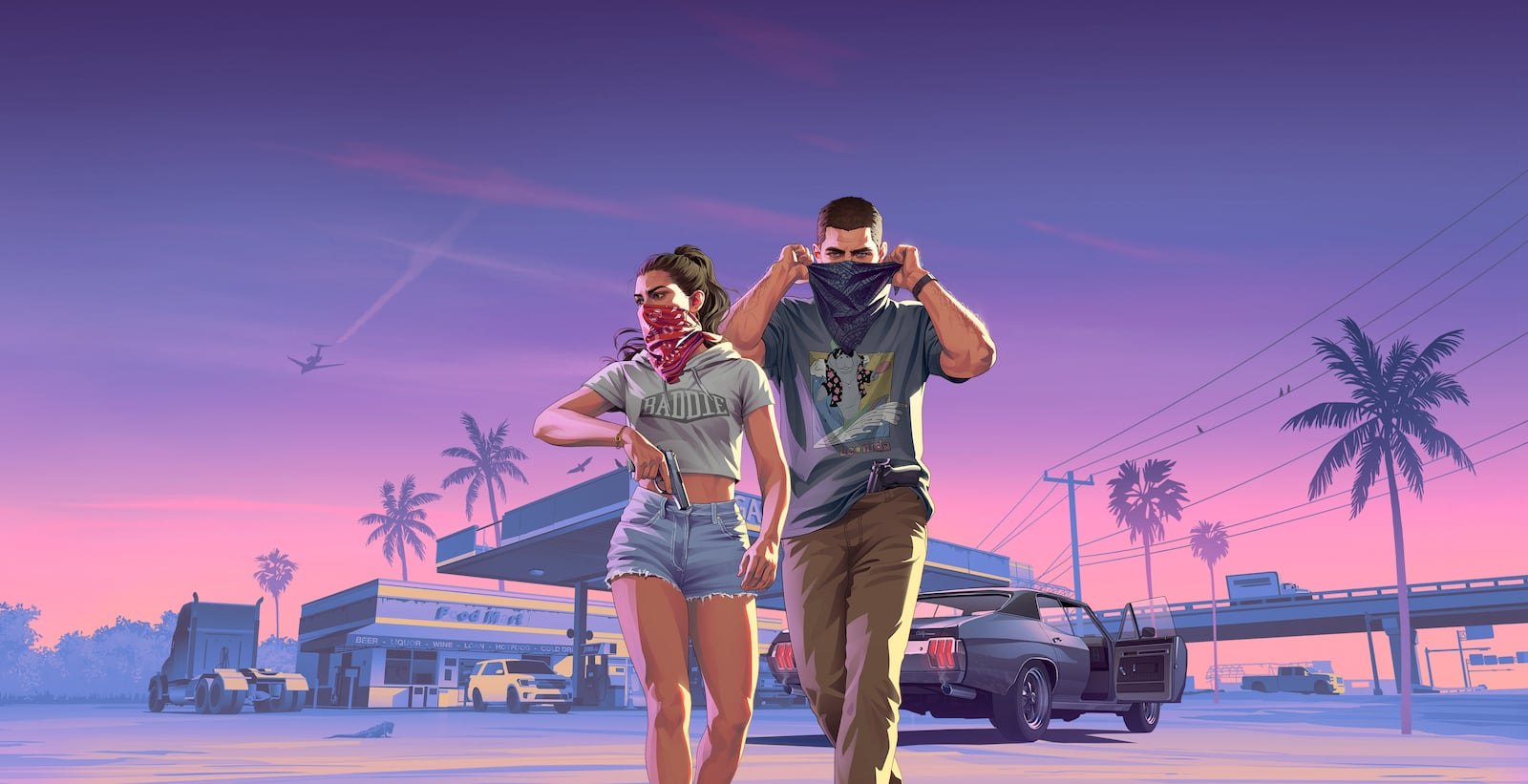
Mike is a low-level Liberty City criminal who wants out. His partner, an older operator named Vinnie, has a plan: run a short string of jobs across the city, cash out, and leave for good. The opening missions are that plan in motion, starting with a tutorial job called Jump Start that teaches driving, shooting and the wanted system in one go.
Then the plan goes wrong. Vinnie’s car explodes with Vinnie, and all of the pair’s money, apparently inside it. Mike is left with nothing except the suspicion that somebody in the city set the whole thing up. The rest of the game is Mike working his way through Liberty City’s gangs to find out who, and taking every paid job along the way.
The structure will feel familiar to anyone who has played GTA III. Mike works for a sequence of contacts, each one tied to a faction, and each one unlocks more of the map. The difference is tone. Mike is a talker, not a mute like Claude, and the text-box dialogue gives the story a slightly pulpy, direct voice that the console games never had.
Heads up
Full plot spoilers follow for the rest of this section, including the ending and the fate of every major character.
The full arc
After the bombing, Mike’s first useful contact is 8-Ball, the explosives expert from GTA III. 8-Ball knows who builds car bombs in Liberty City and points Mike toward the people who could have rigged Vinnie’s car. Their partnership is short. 8-Ball is arrested by the LCPD partway through Mike’s investigation, which is the series’ explanation for why he is sitting in a prison transport next to Claude at the start of GTA III.
Mike then takes work from Jonnie, who runs a bar in Portland and had dealings with Vinnie. Jonnie is found murdered before Mike gets the answers he wants, and Mike has to move on with the trail cold. From there he is picked up by Cisco, the head of the Colombian Cartel. Cisco is easily the most generous contact in the game, both in money and in information, and he offers Mike a way out of the city at the end of it all.
Cisco does not survive the story. He is killed by the Yakuza during the cartel chapter, which pushes Mike into the orbit of King Courtney, who leads the Uptown Yardies and treats Mike as expendable muscle. Courtney’s missions open up Staunton Island properly and set up the Yardies as the loose, unpredictable faction they remain in GTA III.
The final employer is Asuka Kasen of the Yakuza. Asuka hires Mike for the usual gang work and then for a personal job: her niece Yuka has been kidnapped, and Mike is the one sent to recover her. The rescue is the closest the game has to a set-piece mission, and it is where the pieces start to line up.
The reveal is that Vinnie is alive. The car bomb was staged, the money was never destroyed, and Vinnie has been watching Mike do the dirty work of clearing out everyone who could expose the scam. Mike tracks him down, kills him and takes the money back. In the closing scene, Mike takes the flight Cisco arranged before his death and leaves Liberty City for good. He does not appear in any later game.
It is a tight, cynical story. Nobody Mike trusts stays trustworthy, and the only character who treats him fairly ends up dead. For a cartridge with no voice acting and about three cutscene frames per conversation, it lands harder than most people expect.
The city and map
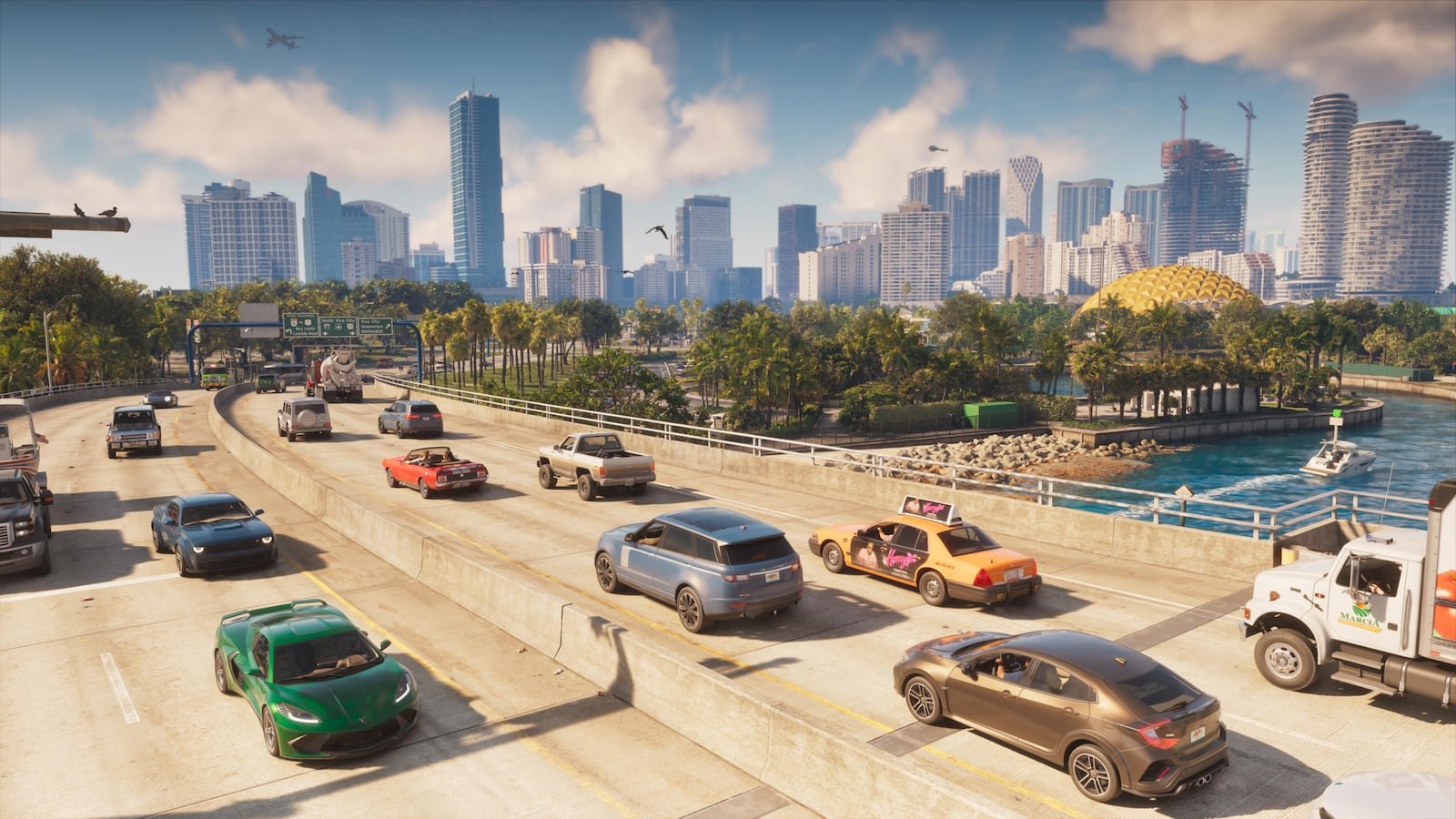
GTA Advance uses Liberty City as laid out in GTA III: three islands, unlocked in sequence, connected by bridges and a tunnel. Digital Eclipse rebuilt the map from a top-down perspective rather than tracing the 3D geometry, so the proportions are approximate. Landmarks are where you expect them, but the roads between them are shorter and the blocks are simpler.
| Island | Unlock point | Notable districts | Role in the story |
|---|---|---|---|
| Portland | Available from the start | Red Light District, Chinatown, Saint Mark’s, Hepburn Heights, Harwood, Trenton, Callahan Point | Opening jobs with Vinnie, 8-Ball and Jonnie |
| Staunton Island | After the Portland chapters | Fort Staunton, Bedford Point, Belleville Park, Torrington, Newport, Liberty Campus | Cisco, King Courtney and the Yakuza chapters |
| Shoreside Vale | Late game | Francis International Airport, Cedar Grove, Wichita Gardens, Pike Creek, Cochrane Dam | Final missions and the ending |
How it plays on a 240-by-160 screen
The camera is fixed directly overhead, closer to the original 1997 GTA than to GTA 2’s zoom-out-at-speed approach. You see roughly one city block at a time. Cars are pre-rendered sprites with enough rotation frames to look smooth, and the GBA’s lack of hardware 3D is hidden well by the fact that nothing in the world has a visible side.
The practical effect is that Liberty City feels denser than it is. Driving across Portland takes well under a minute. Finding your way relies on the minimap in the corner and the fact that the street layout roughly echoes GTA III, so veterans of that game can navigate from memory within an hour.
Because the perspective is flat, there is no verticality. The Cochrane Dam is a flat texture, Fort Staunton has no tower to climb, and the airport runway is a long grey strip. We mention this because players coming from the console games sometimes expect the hidden packages to be tucked on rooftops. They are not. Everything collectible sits at street level.
Vehicles and traffic
The vehicle roster borrows GTA III’s names and silhouettes: Banshee, Cheetah, Stinger, Kuruma, Taxi, Cabbie, Patriot, Sentinel, Mafia Sentinel, Yardie Lobo, Cartel Cruiser, police cars, the Enforcer, Ambulance, Firetruck, and the gang cars that tell you which faction’s turf you have just entered. Handling is sprite-based and forgiving, with a handbrake turn that makes the whole city feel like a drift track.
Traffic density is low by necessity, which changes how police chases work. There is nowhere to hide in a crowd, so you lose heat the old-fashioned way: pay-and-spray garages, bribe pickups, or simply outrunning the sprite-count. At higher wanted levels the Enforcer vans and roadblocks arrive quickly and the screen gets crowded fast.
Characters
GTA Advance has a small cast, and most of them exist to connect the game to GTA III. Here is the roster with the faction each one controls.
| Character | Faction | Role for Mike | Fate |
|---|---|---|---|
| Mike | None | Protagonist, hired gun for everyone else | Leaves Liberty City at the end |
| Vinnie | None | Partner and mentor, fakes his own death | Killed by Mike |
| 8-Ball | Independent | Explosives contact, first real employer | Arrested, appears in GTA III |
| Jonnie | Independent | Portland bar owner tied to Vinnie | Murdered mid-game |
| Cisco | Colombian Cartel | Cartel boss, Mike’s most generous employer | Killed by the Yakuza |
| King Courtney | Uptown Yardies | Yardie leader, treats Mike as muscle | Survives, appears in GTA III |
| Asuka Kasen | Yakuza | Final employer, sends Mike to rescue her niece | Survives, appears in GTA III |
| Yuka Kasen | Yakuza | Asuka’s niece, kidnapping victim | Rescued |
Mike
Mike is the only GTA protagonist of the 3D era with no surname and no later appearance. He is talkative, impatient and loyal to exactly one person, which is the trait the plot punishes. Unlike Claude, he has a motive beyond money from the first mission, and the writing leans into that. His lines are short, sarcastic and delivered through a portrait box rather than a voice actor.
Vinnie
Vinnie is the mentor figure the series would later refine with characters like Lance Vance and Salvatore Leone. He is written as calm and confident, and the game spends enough time with him early on that his “death” lands. The reveal that he engineered the whole thing retroactively makes every early mission a setup, which is a structural trick Rockstar reused in Vice City Stories and GTA IV.
The returning names
8-Ball, King Courtney and Asuka Kasen all appear in GTA III, and Advance is careful not to contradict that game. 8-Ball’s arrest is the clearest piece of connective tissue. Asuka’s role as a Yakuza leader matches her later position, and King Courtney’s hostility to everyone sets up his double-cross of Claude. Cisco does not appear in GTA III, which is consistent with him dying here.
What it changed for the series
GTA Advance is often written off as a side project, and commercially it was. Mechanically it holds a few genuine firsts and one important last.
Firsts and lasts
| Milestone | Detail |
|---|---|
| First GTA on the Game Boy Advance | Also the first GTA developed by an external studio outside the Take-Two family since the Game Boy Color ports |
| First direct prequel to a specific GTA | Set in 2000, with events that feed straight into GTA III’s opening |
| First GTA with a talking, named protagonist in the 3D-era timeline | Mike speaks in every mission; Claude in GTA III does not |
| Last fully 2D top-down GTA | Chinatown Wars in 2009 returned to overhead play but with a 3D engine |
| First GTA with no voice acting since GTA 2 | All dialogue is text, all cutscenes are static |
| Only mainline-timeline GTA never re-released | As of October 2026 |
Mechanics worth noting
The mission design is pure GTA III: drive to a contact, get a job, complete a timed or combat objective, collect a cash reward in GTA dollars. Rewards scale from a few hundred dollars early to several thousand per job later, and money matters because weapons at Ammu-Nation are not cheap on a handheld budget.
Side activities port over with surprising completeness. Taxi, Vigilante, Paramedic and Firefighter missions are all available by hijacking the relevant vehicle and pressing the action button. Hidden packages are scattered across all three islands and reward weapon spawns at safehouses. Rampages return as timed kill challenges. None of this was mandatory on a cartridge of this size, and it is the main reason the game still feels like GTA rather than a licensed cash-in.
Two things are missing compared with GTA III. There is no radio with licensed stations, only an original chiptune soundtrack. And there are no cheat codes at all. Anyone used to summoning a tank with the gta sa rhino cheat will find no equivalent here; the Rhino does not even exist in the game. Progress is earned or not at all.
The development story
The project began as a straight port of GTA III to the GBA, developed by Crawfish Interactive. That studio closed in 2002 before anything shipped. Digital Eclipse, a Californian studio best known at the time for arcade compilations, took the licence and rebuilt the concept as an original top-down game set in the same city and timeline.
That history explains a lot. The game’s map, cast and structure are GTA III’s because the original brief was GTA III. The perspective, sprites and text dialogue are Digital Eclipse’s answer to hardware that could not render Liberty City in 3D. Digital Eclipse went on to build the Mega Man Legacy Collection, Atari 50 and The Making of Karateka, and was acquired by Atari in 2023. GTA Advance is the one original Rockstar title on their résumé.
Versions and re-releases
This section is short because the list is short.
| Version | Platform | Status |
|---|---|---|
| Original cartridge | Game Boy Advance | Released October 2004, the only version |
| GTA: The Trilogy, The Definitive Edition | PS4, PS5, Xbox, Switch, PC, mobile | Released November 2021, does not include GTA Advance |
| Nintendo Switch Online GBA library | Switch | Launched February 2023, does not include GTA Advance |
| Any digital store | PlayStation, Xbox, Steam, Rockstar Store, mobile | Never listed |
| Remaster or port | Any | Not announced |
The Definitive Edition trilogy covered GTA III, Vice City and San Andreas and skipped both PSP games and this one. Rockstar has not mentioned Advance in any earnings call, press release or store listing since 2004. Everything else in the GTA III era is available somewhere; this is the gap.
Which version to play is therefore not a question. There is one, and it runs on 2004 Nintendo hardware or on devices that accept its cartridge.
Where to play it today
As of October 2026 there is exactly one legitimate way to play GTA Advance: a physical cartridge in compatible hardware. We treat this as a how-to because the process has more pitfalls than most people expect, mainly around counterfeit carts and dead saves.
What you need
- A genuine GTA Advance cartridge, loose or boxed
- Compatible hardware with a working GBA slot (see the table below)
- A charged battery or the correct AC adapter for that hardware
- Optionally, a screen with backlighting, because the original 2001 GBA has none
- A few minutes to verify the cartridge before you commit to a save
Hardware that accepts the cartridge
| Hardware | Year | Plays GTA Advance | Notes |
|---|---|---|---|
| Game Boy Advance | 2001 | Yes | No backlight, hard to read the minimap indoors |
| Game Boy Advance SP | 2003 | Yes | Front-lit, later AGS-101 model is backlit and the best original option |
| Game Boy Micro | 2005 | Yes | Backlit, very small screen, text boxes are tiny |
| Game Boy Player on GameCube | 2003 | Yes | Plays on a TV via GameCube, needs the start-up disc |
| Nintendo DS and DS Lite | 2004 and 2006 | Yes | Slot-2, plays GBA carts, DS Lite screen is excellent for this game |
| Nintendo DSi, DSi XL, 3DS family | 2008 onward | No | Slot-2 removed, no GBA cartridge support |
| Analogue Pocket | 2021 | Yes | FPGA hardware, plays original carts on a modern screen |
For our money the DS Lite or a backlit GBA SP is the sweet spot. Both are cheap, both are common, and both light the screen well enough to read the minimap and the dialogue portraits.
Quick steps: play GTA Advance on original hardware
- Buy a cartridge and check the label, the rear sticker and the board before paying.
- Clean the cartridge contacts with isopropyl alcohol and a lint-free swab.
- Insert it into a GBA, GBA SP, Game Boy Micro, DS, DS Lite, Game Boy Player or Analogue Pocket.
- Power on and confirm the Rockstar and Digital Eclipse logos appear before the title screen.
- Start a new game, complete Jump Start, and save at the Portland safehouse.
- Power off, power on again, and confirm the save loads. If it does not, the cart is faulty or fake.
Buying a cartridge: what to check
Fakes are the main problem. GTA Advance is a popular target for counterfeiters because demand is steady and the real cartridge was never reprinted. Here is what we check on every listing.
- The label should carry the Rockstar logo, the ESRB M rating and the Nintendo seal. Blurry printing, odd colour balance or a glossy finish that does not match other GBA carts are warning signs.
- The cartridge shell should be the standard Nintendo grey with the correct moulded “Nintendo” text on the back. Reproductions often use a slightly different grey and a wrong font.
- Ask for a photo of the circuit board. Genuine Nintendo boards have a clear Nintendo part number and a tidy layout. Fakes frequently use a glob-top chip and a hand-soldered battery.
- Boxed copies should come with the instruction manual and the Liberty City map insert. Those are the two components most often missing, and their absence is the main driver of price difference between a “complete” copy and a loose one.
- Buy from sellers who accept returns. A cartridge that boots but does not save is the most common defect, and you cannot test that from a photo.
For pricing, we do not publish figures in this entry because they move. Loose cartridges are consistently the cheapest tier, boxed copies with manual and map sit well above that, and sealed copies are a collector’s market with no useful ceiling. Check recent sold listings rather than asking prices before you bid.
Common mistakes and troubleshooting
- The game boots but the save vanishes: the cartridge is counterfeit or the save chip has failed. Return it. Real GTA Advance carts save reliably.
- The screen is too dark to read: you are using an original 2001 GBA. Move to a backlit SP, a DS Lite or a Game Boy Player.
- The cartridge does not fit a DSi or 3DS: those systems have no GBA slot. Only the original DS and DS Lite play it.
- The game freezes during a mission on a DS: usually dirty contacts. Clean the cartridge and the slot and reseat it.
- The Game Boy Player shows nothing: you need the Game Boy Player start-up disc in the GameCube drive. The hardware will not boot without it.
Expected result
When everything is working you get the Rockstar splash, a title screen, and a clean new game that saves at safehouses. The main story takes most players a weekend. Hunting every hidden package and finishing the side missions roughly doubles that. The game runs at a steady frame rate on all listed hardware; there is no performance difference between a 2004 GBA SP and a 2021 Analogue Pocket beyond screen quality.
Emulation
We note it because every reader will ask. GTA Advance runs in standard GBA emulators, and the Analogue Pocket runs the real cartridge through FPGA hardware. Rockstar has never sold a ROM of this game, so there is no legitimate download source, and we do not point to one. Dumping a cartridge you own is the only route we will describe.
Agent's note
Play GTA Advance before GTA III rather than after. The 8-Ball arrest, Asuka’s position and King Courtney’s hostility all pay off in GTA III’s opening hours, and the story reads as a prologue rather than a footnote.
Reception and legacy
At launch
Critics in 2004 reviewed GTA Advance in the shadow of San Andreas, which arrived the same day on PlayStation 2 and absorbed almost all the attention. The GBA game settled into a Metacritic average in the high 60s. The praise focused on how much of GTA’s structure survived the move to a handheld: three islands, side missions, a wanted system, a complete story. The criticism focused on the presentation. Static cutscenes, text dialogue and a fixed overhead camera felt like a step back from GTA III in 2001, let alone San Andreas in 2004.
Sales were modest and Rockstar never disclosed them. The game did not get a Player’s Choice reprint, and it was never bundled with hardware. That lack of a second print run is why clean copies are harder to find than their original print volume would suggest.
Why nobody talks about it
Three reasons, in our view. First, the same-day launch with San Andreas buried it. Second, the GBA audience and the GTA audience barely overlapped; the series’ core players owned a PlayStation 2 and had no reason to buy a handheld prequel. Third, the lack of any re-release means a whole generation has never had the option to try it. Every other 3D-era GTA has had a second life on digital stores. This one has not.
The “why does nobody like GTA Advance” question comes up constantly, and our honest answer is that most of the people asking have not played it. The ones who have tend to rate it as a competent, slightly thin GTA with a better story than its reputation.
Legacy within the series
The game’s clearest influence is on Chinatown Wars, the 2009 DS title that returned to an overhead camera and a Nintendo handheld with a far bigger budget. Rockstar Leeds made that game in-house, which tells us the company saw value in the format but wanted direct control of it. Chinatown Wars took Advance’s structural lesson, that a GTA story can work in top-down with text dialogue, and gave it cel-shaded 3D, touchscreen minigames and a proper radio.
Advance also set the template for the prequel-in-the-same-city approach that Liberty City Stories used a year later. LCS is set in 1998, Advance in 2000, GTA III in 2001. Together they form a three-game Liberty City timeline that Rockstar never formally promoted but never contradicted either.
Canon-wise, the game sits inside the 3D universe alongside GTA III, Vice City, San Andreas, LCS and VCS. Its events are referenced only by implication in GTA III. No later game names Mike or Vinnie. The HD universe that began with GTA IV, and the version of Liberty City in that game, has no connection to it.
Preservation status
As of October 2026 GTA Advance remains unavailable on any platform other than its original cartridge. Rockstar has not announced a port, a remaster or an inclusion in any collection. We will update this entry if that changes. The current situation is identical to Liberty City Stories and Vice City Stories, both of which were sold on PlayStation Store at various points and later delisted, with the difference that Advance was never digitally sold at all.
FAQ
Is GTA Advance canon?
Yes. It is set in Liberty City in 2000, one year before GTA III, and its events are consistent with that game. 8-Ball’s arrest in Advance explains why he is in police custody at the start of GTA III. Asuka Kasen and King Courtney hold the same positions in both games.
Who is the main character in GTA Advance?
Mike. He has no surname, speaks in every mission through text dialogue, and leaves Liberty City at the end of the story. He does not appear in any other Grand Theft Auto game.
Does GTA Advance have cheat codes?
No. It is the only GTA of its era with no cheat system at all. There are no button combinations, no phone numbers and no debug inputs. Money, weapons and vehicles are earned through missions, hidden packages and side activities.
Can I play GTA Advance on Switch, PlayStation or PC?
Not officially. It is not in GTA: The Trilogy, The Definitive Edition, not in the Nintendo Switch Online GBA library, and not on any digital store. The only legitimate option is the 2004 cartridge in a GBA, GBA SP, Game Boy Micro, DS, DS Lite, GameCube with a Game Boy Player, or an Analogue Pocket.
Why was GTA Advance released the same day as San Andreas?
Rockstar launched both on 26 October 2004 in North America. The GBA game was positioned as a companion release rather than a competitor, and in practice San Andreas took all the coverage. Rockstar has never commented on the scheduling decision.
How long is GTA Advance?
The main story fits comfortably into a weekend of handheld play. Completing every hidden package, rampage and side mission roughly doubles the time. There is no multiplayer and no post-story content beyond those collectibles.
Is a GTA Advance remaster coming?
Not announced. As of October 2026 Rockstar and Take-Two have made no statement about porting or remastering the game. Any report claiming a date, price or platform for a GTA Advance re-release is a rumor until an official source says otherwise.